How to Fix Uneven Tire Wear Caused by Misalignment
Uneven tire wear? It’s likely misalignment. Coldwater’s rough roads, heavy loads, and harsh winters wreak havoc on your suspension and steering. From feathering to camber wear, these red flags signal it’s time for a precision alignment. Michigan MD Alignment can help.
There’s nothing more frustrating than spotting uneven tire wear on your rig, especially when you’ve invested in quality rubber. One tire’s wearing on the outside, another’s got a bald patch in the middle, and suddenly your handling feels like a rodeo. What gives?
In most cases, the culprit is misalignment. And if you’re rolling through Coldwater, MI, the rough seasonal roads, potholes, and heavy hauls aren’t doing your truck any favors. Let’s break down why misalignment leads to uneven tire wear, how to fix it, and what steps you can take to prevent it from happening again.
What Causes Misalignment in Heavy-Duty Trucks?
Heavy-duty trucks experience constant stress—whether it's hauling freight across Michigan’s backroads or navigating icy interstates in the dead of winter. Misalignment usually creeps in when:
- You hit a pothole or curb
- Suspension components wear down
- Bushings, kingpins, or tie rods loosen
- Air ride systems shift after uneven loads
- You’ve recently had frame or axle work done
When alignment goes off, your tires no longer sit square with the road. They either toe in, toe out, or experience camber issues—each of which leads to uneven tire wear.
Recognizing the Signs of Misalignment
Not all uneven wear is obvious right away. But the longer it goes unnoticed, the worse the damage. Here are key red flags:
Feathering: Tread ribs feel smooth on one side and sharp on the other.
Camber Wear: Inside or outside edges wear faster than the middle.
Cupping: Scalloped dips in the tread, often from bad shocks or bouncing tires.
Pulling to One Side: Truck consistently veers left or right.
Crooked Steering Wheel: You’re driving straight, but the wheel’s off-center.
Sound familiar? If so, it’s time to get your alignment checked.
How Misalignment Causes Tire Damage
Let’s talk mechanics. Your steering and suspension systems are responsible for holding your wheels at precise angles. When those angles shift, so does the distribution of pressure across your tire tread.
If the front axle is out of spec, tires will scrub against the pavement instead of rolling smoothly. That constant dragging—multiplied by hundreds of miles—shreds the tread unevenly. And in Coldwater’s climate, icy roads and uneven terrain only add fuel to the fire.
Alignment issues also tax your suspension and reduce fuel efficiency. You’re not just wearing out your tires—you’re wearing out your whole front end.
Step-by-Step: How to Fix Uneven Tire Wear from Misalignment
1. Full Axle Alignment Inspection
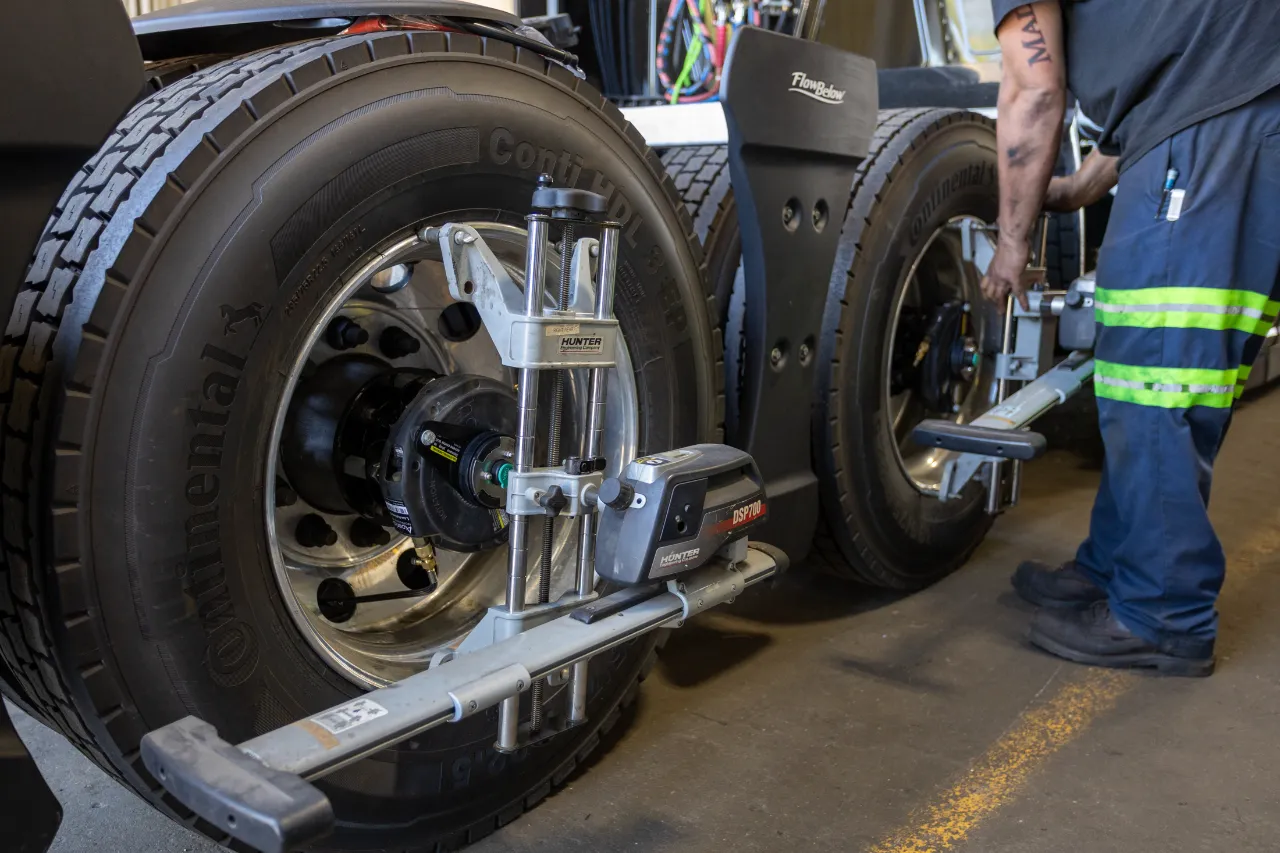
The process starts with a professional 3-axle alignment—front, rear, and trailer (if needed). Shops like Michigan MD Alignment use laser or digital systems to get millimeter-accurate measurements.
They’ll measure:
- Toe-in / Toe-out
- Camber
- Caster
- Thrust angle
- Frame offset
2. Correcting Suspension Components
If any suspension parts—like tie rods, bushings, drag links, or kingpins—are worn or loose, they must be replaced before alignment adjustments are made. There’s no point in aligning a loose steering system.
3. Adjusting to OEM Specs
Using the alignment data, technicians will tweak your axles back to manufacturer specifications. Don’t just “eyeball it”: precision is key. On heavy-duty rigs, even a few degrees off can destroy a tire in 10,000 miles or less.
4. Tire Rotation or Replacement
Depending on how bad the wear is, your tires might still have life left. If possible, rotate them to extend usability. But if the damage is severe—especially cupping or exposed belts—it’s time for a new set.
5. Recheck After 500–1,000 Miles
After making adjustments and putting on new tires, it’s smart to have a follow-up check. This ensures nothing’s shifted under load and that the wear is staying consistent.
How to Prevent Misalignment in the Future?
Regular Preventive Maintenance
Misalignment often results from progressive wear in the suspension system. That means catching worn bushings, sagging springs, or air ride shifts before they become a bigger issue. Inspections every 10,000–15,000 miles are a smart baseline.
Axle Load Balancing
Overloaded or uneven loads—especially on tandems or lift axles—can cause alignment shifts. Distribute weight evenly and check your air suspension pressure regularly to prevent lean-induced wear.
Tire Pressure Checks
Under- or overinflated tires wear differently depending on your alignment settings. Keep tires inflated to manufacturer specs and check them during pre-trip inspections.
Stay Alert to Handling Changes
If your rig suddenly starts pulling to one side, gets “floaty,” or the steering wheel feels off, don’t wait. Get it checked before your tires take the hit.
When to Visit Michigan MD Alignment in Coldwater, MI
Uneven tire wear caused by misalignment is more than just a maintenance headache—it’s a warning sign that your suspension and steering components are under stress. Left unchecked, it’ll chew through tires, reduce fuel economy, and strain your driveline.
Fortunately, alignment issues are fixable and preventable. With regular inspections, component replacements when needed, and professional alignment from trusted local shops like Michigan MD Alignment, you’ll keep your rig rolling true and your tread wearing evenly.
More Articles
.webp)
.webp)
Contact Us
Need an alignment, have questions, or want to schedule your truck or trailer in for a service or repair? Get in touch, we're open Monday through Friday from 8:00am to 4:30pm.